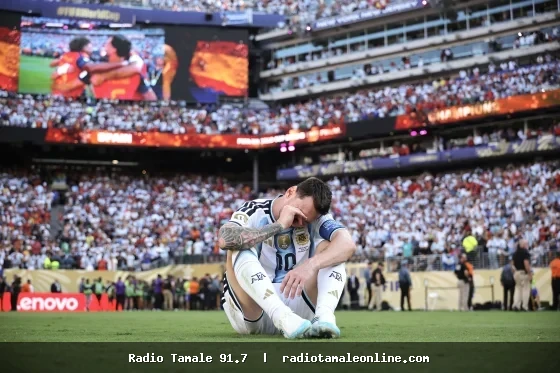
The final whistle in the 2026 World Cup hung in the air like a heavy exhale. A single goal separated joy from heartbreak, celebration from a long, aching question about endings. Lionel Messi, the wizard who once seemed to bend time and turf to his will, stood on the pitch with the look of a man who had given everything and received the most complicated of returns, admiration coated in sorrow.
This was not the script many imagined for the Argentine maestro. For years Messi’s story read like the perfect fairy tale of modern football small-town boy, Ballon d’Ors, club glories, and finally the 2022 World Cup that cemented his place among the immortals. Four years on, another chance at global immortality slipped through his fingers in a one-goal final that hinged on inches and moments. Yet even in defeat, his legacy is untouched.
If Messi chose this moment to step away, his career would read as a masterpiece complete. The debate about who is the greatest will rage on in bars, online forums, and sports pages, but such arguments miss the point of Messi’s true impact. Greatness in sport is measured not only in trophies but in the quiet, steady transformation a player brings to the game itself. On that measure, Messi’s footprints are permanent.
Across continents and generations, Messi rewrote what was possible for a footballer of his stature. He taught coaches new tactical languages, forced defenders to invent new strategies, and compelled teammates to raise their standards. Young players around the globe, boys and girls practicing in dusty lots, urban cages, and suburban park pitches, saw in Messi a mirror of what meticulous craft combined with humility could produce. For many aspiring players, his low center of gravity and lightning-first touch became a template. His vision and unselfishness, a lesson in sportsmanship.
The joy Messi brought into households is harder to quantify than a goals-per-game ratio, but it is no less real. There have been birthdays enlivened by a last-minute dribble, family evenings paused by magical runs, and quiet moments when struggling fans found solace in a solo nutmeg or an impossible pass. Television screens in tiny living rooms in Ghana, crowded bars in Buenos Aires, and luxury boxes in Europe all recorded the same human reaction. Wide eyes, involuntary smiles, and the shared warmth that comes when art appears on a playing field.
Messi’s influence also stretched beyond sheer entertainment. He became an ambassador for football’s softer virtues discipline, resilience, and dignity. Unlike the caricature of a mercurial superstar, Messi consistently presented himself as a model professional. His interviews, while never ostentatious, often carried notes of gratitude: to teammates, coaches, and the small communities that nurtured him. He used his platform to support foundations, to stand by causes in Argentina and beyond, and to show younger athletes how to balance personal brilliance with responsibility.
That balance made him exemplary. In an era when sporting figures are scrutinized under microscopes, Messi managed to be both intensely private and universally beloved. His humility, on and off the pitch gave shape to how generations would judge sporting success. Fans and pundits admired not just the trophies and records but the way he carried himself in loss: accepting, yet hungry; composed, yet human.
There have been moments when Messi’s name provoked heated comparison to other legends. The debate over the “greatest of all time” will never die because sport loves narratives and absolutes. Yet those arguments too often obscure the real legacy Messi is leaving behind: a culture of creativity and respect. He proved that greatness need not be loud to be immense. It can be a quiet, persistent excellence that changes how the game is played and how players dream.
In the days after this narrow World Cup defeat, social media filled with messages from those Messi inspired. Young players posted clips titled “Because of Leo” showing bicycle-kick attempts, dribbling drills, and mimicries of his signature celebration. Parents wrote about kids who chose football because of him. Coaches shared training plans shaped by his movement and passing. These small, scattered acts of mimicry and devotion are a living, multiplying testament to Messi’s reach.
What remains clear is that the statue of his career cannot be toppled by a single match. He has already entered the cultural grammar of football an almost mythic reference point that will be taught, replayed, and debated for decades. His name sits beside match-winning goals and quiet assists alike, a ledger of moments that have stitched themselves into the fabric of global sport.
And yet, the human story continues. Some will advise him to hang up his boots and leave the stage while the memory of his brilliance still glows. Others will urge him to keep going, to chase new chapters and mend the ache of this night. Argentina’s head coach, Lionel Scaloni, cut through the speculation with a simple reminder, Messi will continue to play for the national team until he decides to quit. Those words do more than confirm a plan they reaffirm how loved, respected, and revered he is, both as a person and a professional.
Around the world, fans will watch and wait, ready to celebrate whatever comes next. For now, Lionel Messi remains the quiet king, his reign complicated by loss, but his footprints on the global game eternal.
By: Addy Kennedy Edem







0 Comments