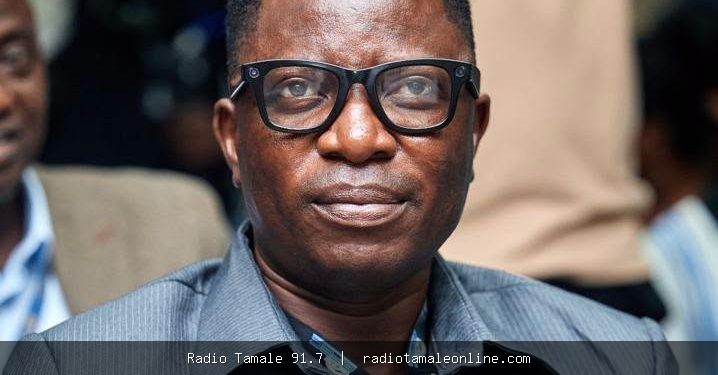
The National Democratic Congress (NDC) has rejected calls for the state to finance the activities of political parties, arguing that public funds should rather be directed towards addressing pressing national challenges.
Speaking on Eyewitness News on Wednesday, July 29, Deputy Director of IT and Elections, Rashid Tanko Computer, questioned why government funds should be allocated to political parties when there are urgent needs in areas such as infrastructure, education, and healthcare.
According to him, the NDC won’t support the idea of using state resources to fund political parties, particularly at a time when the country continues to grapple with challenges in key sectors.
“The NDC will not subscribe to it. Why would the state use state resources when we have a lot of challenges across the country? Accra floods and all these things are worrying us. In the educational sector, we are looking for money to end double track.
“We are looking at the health sector; there are a lot of big pushes, including opening up our road networks across the country,” he said.
His comments follow a Supreme Court ruling in which the apex court, by a 5-2 majority decision, held that the delegate system used by political parties to elect presidential and parliamentary candidates is inconsistent with democratic principles.
The ruling has since reignited discussions on political party reforms, including whether the state should provide financial support to political parties to enable them to conduct more inclusive internal elections.
However, Tanko Computer maintained that political parties must be capable of funding and organising their own internal processes without relying on taxpayers’ money.
“If you’re a party and you can’t organise yourself, fold up. If they can’t organise, then they should fold up. They shouldn’t bring that. That should not be something for discussion at all. Why should the state do that?” he added.
He argued that scarce public resources must be prioritised for projects and services that directly improve the lives of citizens rather than supporting political activities.










0 Comments