
The World Bank says a prolonged conflict in the Middle East and Ghana’s heavy reliance on gold and cocoa exports could expose the economy to external shocks and undermine recent macroeconomic gains.
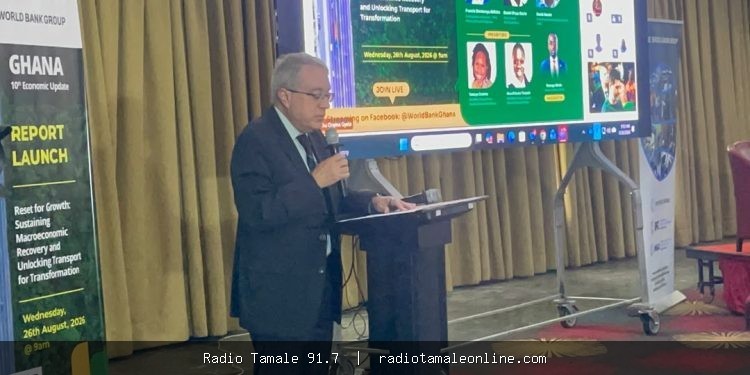
Speaking at the launch of the World Bank Group’s 10th Ghana Economic Update, World Bank Division Director for Ghana, Liberia and Sierra Leone, Dr Robert Taliercio O’Brien, said a prolonged Middle East conflict could disrupt global trade and increase energy prices, production costs and inflationary pressures.
“Let me just highlight a few risks for further discussion. Externally, the spillover effects from a prolonged Middle East conflict can exacerbate global trade disruptions, leading to higher energy prices, production costs, and broad inflationary pressures on the economy,” he said.
He said Ghana’s dependence on gold and cocoa as major export commodities also leaves the economy exposed to swings in international prices.
“Ghana’s heavy export concentration in gold and cocoa leaves the country vulnerable to adverse price shifts that could rapidly reverse the external gains and pressure the exchange rate, inflation, and public finances,” Dr Taliercio O’Brien stated.
Energy, COCOBOD pressures
The World Bank also identified pressures within state-owned enterprises, particularly in the energy and agricultural sectors, as key domestic risks to Ghana’s economic outlook.
“Domestically, SOE pressures in the energy and agricultural sectors remain acute,” Dr Taliercio O’Brien mentioned.
He disclosed that delays in implementing energy sector recovery programmes are costing Ghana approximately $1 billion annually.
“Delays in energy sector recovery programs cost the country approximately $1 billion annually, a staggering sum,” he said.
According to the World Bank, financial and operational challenges at the Ghana Cocoa Board are also weighing on cocoa farmers and public finances.
“COCOBOD’s financial and operational inefficiencies are taking a toll on farmers and the public’s finances,” Dr Taliercio O’Brien remarked.
Calls for COCOBOD reforms
The World Bank is also calling for far-reaching reforms to the legal and operational framework governing COCOBOD to reduce fiscal risks and introduce stronger market-based principles.
“We welcome continued discussion and debate on the COCOBOD Act, and we suggest that far-reaching reforms of the Act are needed to promote market-based principles and minimize quasi-fiscal risks,” he said.
Dr Taliercio O’Brien warned that failure to address the vulnerabilities in the energy and agricultural sectors could reverse the fiscal progress made under Ghana’s IMF programme.
“Without decisive action in both areas, the fiscal gains achieved under the IMF program could quickly erode,” he warned.






0 Comments