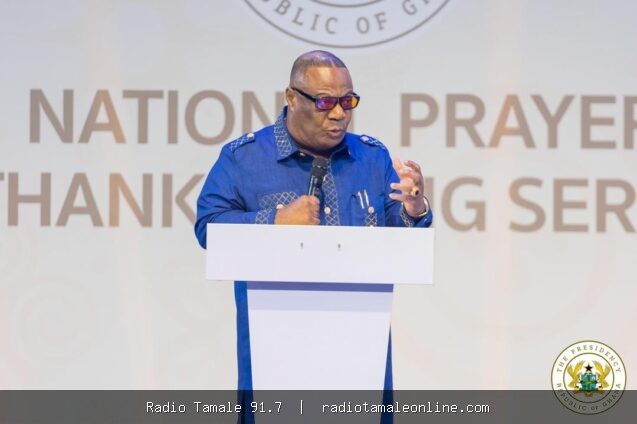
The General Overseer of Action Chapel International, Archbishop Nicholas Duncan-Williams, has clarified that his call for prayers against illegal mining, or galamsey, should not be interpreted as opposition to law enforcement.
He said his appeal was intended to complement, rather than replace, efforts by the security agencies and other state institutions to enforce Ghana’s laws against illegal mining and gold smuggling.
Speaking on Joy FM’s Super Morning Show on Monday, August 17, 2026, Archbishop Duncan-Williams said the spiritual dimension of the galamsey menace required attention because, in his view, some of those involved were operating with what he described as “powers from the other side.”
“The aspect of the prayer is the fact that some of these people doing illegal mining are working with powers from the other side. So my job is not to police or enforce the law. That is not what I do,” he said.
“I am telling the people that we need to pray to deal with whatever is responsible for the lawlessness.”
The Archbishop said his position was not that the law should be ignored, stressing that enforcement remained necessary to address the activities of illegal miners and those facilitating them.
“So I am not saying that the law shouldn't be applied,” he said.
“I’m saying that we should pray for those who are enforcing the law to be empowered to do their job because it’s a very risky job.”
Read Also: Ghanaians have no idea how much foreigners make from galamsey – Archbishop Duncan-Williams
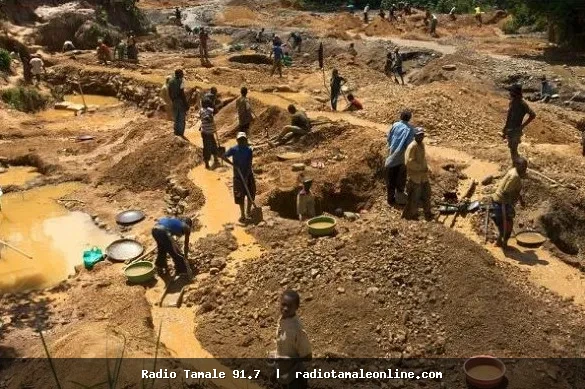
He said some illegal mining operations involved armed individuals and described the activities as part of a broader network that could pose serious risks to security personnel.
“These people who are doing illegal mining are armed, and it’s a whole cartel to itself,” he said, adding that some of those involved also engaged in practices he described as fetish-related activities.
Archbishop Duncan-Williams said resistance to enforcement could also make the fight against galamsey politically sensitive, particularly when people failed to appreciate the importance of responsibility and accountability.
He explained that his concerns had also been informed by interactions he had encountered while travelling outside Ghana and by calls from foreign nationals seeking access to Ghanaian gold following the establishment of the Ghana Gold Board (GoldBod).
He said some foreign nationals had contacted him seeking assistance to establish communication with GoldBod after losing access to previous channels through which they bought gold.
“I’ve had calls from foreign nationals. Now, when I say I know them, it’s not like they are my friends. I mean, they call me and say, ‘Oh Archbishop, give me your number', we used to buy gold, and now we don’t have access to it anymore since the GoldBod came into place. Is there a way you can help us to contact the GoldBod and to buy gold?” he recounted.
He said the calls reinforced his view that there were interests seeking to influence how Ghana's gold resources were mined and traded.
Asked why some businesspeople would approach him to help them gain access to GoldBod, the Archbishop said he could not speak for them.
“I cannot answer that for them. But I just tell them that, listen, I am a man of God. I don’t do gold business,” he said.
Archbishop Duncan-Williams also broadened his concerns beyond galamsey, citing what he described as a wider culture of indiscipline and poor compliance with laws in Ghana.
He referred to his experience in Kigali, Rwanda, where he observed widespread compliance with road-safety regulations, including the use of helmets by motorcycle riders.
He said Ghana had laws governing many aspects of public life but often struggled to enforce them consistently.
According to him, the problem therefore extends beyond illegal mining and reflects a broader challenge with discipline, accountability and compliance.
“There is a lot of indiscipline in the whole atmosphere in our upbringing,” he said.
He maintained that addressing such problems would require sustained efforts over time because the issue was deeply rooted in society.
Archbishop Duncan-Williams urged Ghanaians to view the fight against galamsey as a national responsibility and to support those enforcing the law while recognising the risks involved.
He said his call for prayer was therefore aimed at seeking protection and strength for the President, GoldBod leadership, security agencies and others directly involved in the fight.
“I am telling them, let’s pray for the members of the group, the chairman of the board, the CEOs and our military, national security, our police for protection,” he said.
He said some security operations had involved face-to-face confrontations with heavily armed individuals, making the work particularly dangerous.
The Archbishop stressed that his position should not be reduced to a religious argument or politicised, saying the broader objective should be responsible mining, accountability and protection of Ghana’s natural resources.


0 Comments