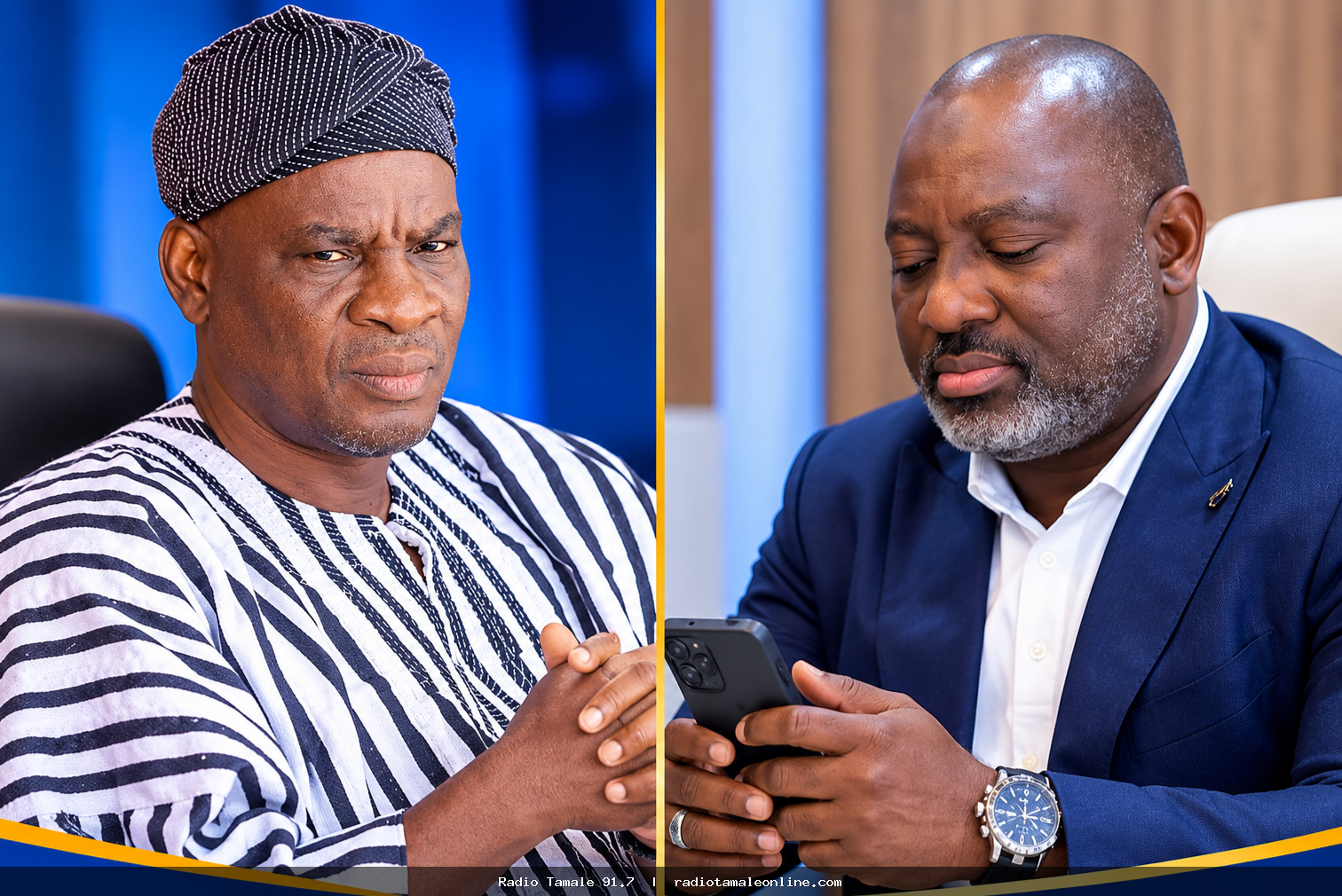
Those who genuinely care about the political future and development of Northern Ghana should be more interested in promoting constructive engagement than sustaining divisions for personal advantage.
An opinion feature By Robicon Mornahson
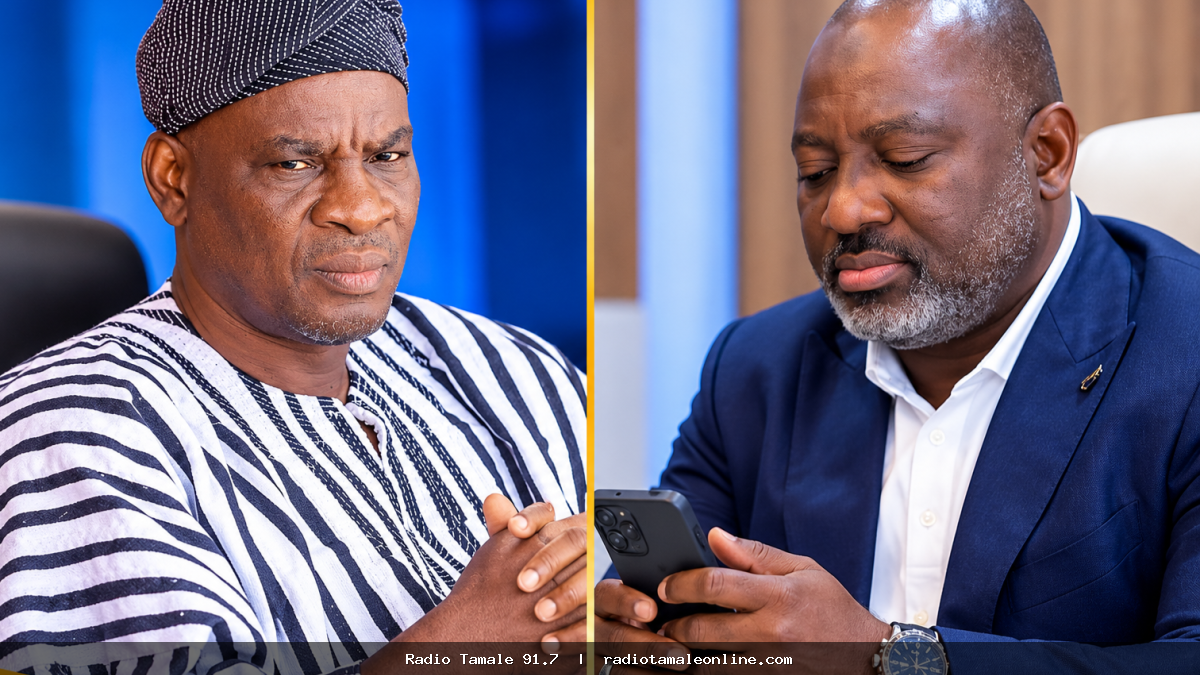
There is a growing feeling within me that the purported divisions between Alhaji Yushaw Hussein [Ahaji Fuzak] and Hon. Haruna Iddrisu may be benefiting certain individuals more than the people and political interests they claim to represent.
For me, what is particularly concerning is the possibility that some individuals, including media practitioners [radio/Tv presenters & bloggers], are finding opportunities to advance their personal, political and professional interests through the continuous discussion, amplification and, perhaps, exaggeration of these perceived differences.
In every political environment, disagreements, competing interests and differences in opinion are inevitable. Political actors are not expected to agree on every issue, neither should every difference in perspective be interpreted as evidence of a serious breakdown in relationships.
However, when ordinary political disagreements begin to attract disproportionate attention, generate persistent speculation and become subjects of endless public commentary, it becomes necessary to ask some fundamental questions: Is there really a deep-rooted division, or are certain individuals deliberately creating and sustaining a narrative that serves their own interests?
The conversation surrounding Alhaji Fuzak and Haruna Iddrisu deserves this kind of scrutiny.
One of the troubling developments in contemporary political discourse is the tendency for some individuals to turn political disagreements into opportunities for personal relevance and financial advantage.
The media, particularly radio and online platforms, have considerable influence over how political developments are understood by the public. Through interviews, panel discussions, commentary and social media publications, media practitioners can either promote informed public debate or contribute to unnecessary political tension.
Unfortunately, where sensationalism takes precedence over responsible journalism, political disagreements can easily be transformed into dramatic rivalries.
A seemingly minor disagreement can become a major political controversy through repeated discussions, selective interpretations, anonymous claims and provocative headlines.
The danger is that, in such circumstances, the objective may gradually shift from understanding the issues to keeping the controversy alive.
It is therefore legitimate to question whether everyone participating in the Alhaji Fuzak–Haruna Iddrisu narrative is genuinely interested in resolving whatever differences may exist, or whether some have discovered that the controversy provides them with an opportunity to remain relevant, attract attention, secure engagements or advance particular interests.
This is not to suggest that every commentator or media practitioner discussing the matter has an ulterior motive. Rather, it is a call for greater scrutiny of the interests behind the narratives being presented to the public.
Political divisions, whether real or perceived, can have consequences beyond the individuals directly involved.
They can create unnecessary suspicion among the NDC supporters, weaken relationships within the NDC's political organisations, encourage factional loyalties and divert attention from more important governance and development issues.
More importantly, when supporters begin to view every political development through the lens of rivalry, the possibility of constructive engagement becomes increasingly difficult.
The situation becomes even more complicated when individuals who should ordinarily serve as bridges between competing interests instead become active participants in deepening the divisions.
Media practitioners, in particular, have a responsibility to distinguish between legitimate political analysis and the deliberate amplification of speculation.
The responsibility of the media is not to manufacture enemies for political actors or turn every disagreement into a battle for supremacy. It is to provide accurate information, interrogate competing claims, offer context and create platforms for meaningful engagement.
Where there is credible evidence of disagreement, it should be reported. Where claims remain speculative, they should be treated as such.
Now, the most important question in this entire conversation is not whether Alhaji Fuzak and Haruna Iddrisu have differences, but who stands to benefit from the continuous portrayal of their relationship as one characterised by hostility and division.
Are there individuals who benefit from presenting themselves as political insiders with exclusive information?
Are there commentators whose relevance depends on continuously discussing the alleged disagreements?
Are there political interests that would prefer to see relationships deteriorate rather than encourage reconciliation and constructive engagement?
These are legitimate questions that deserve thoughtful consideration.
Sometimes, the people who speak most loudly about political unity may be the same people whose actions and commentary contribute to division. Others may find it convenient to present themselves as analysts while selectively promoting narratives that serve particular interests.
The public must therefore learn to distinguish between genuine political analysis and commentary driven by personal interests.
Beyond the personalities involved, there is a bigger issue that deserves attention.
Northern Ghana has important development priorities that require sustained political attention, collaboration and responsible leadership. Issues relating to employment, education, healthcare, infrastructure, agriculture and economic opportunities should command far greater public attention than personality-driven political rivalries.
Political leaders and influential stakeholders must recognise that their relationships, disagreements and competing interests should not become obstacles to the collective aspirations of the people.
Equally, the media must be conscious of its influence in shaping political perceptions. It should not become an instrument through which personal grievances, political calculations and commercial interests are disguised as public-interest journalism.
There is nothing wrong with scrutinising political relationships or questioning the conduct of influential individuals. Indeed, that is an essential function of a free and independent media. However, such scrutiny must be grounded in facts, fairness and a genuine commitment to public accountability.
Ultimately, whether there are genuine differences between Alhaji Fuzak and Haruna Iddrisu is a matter that should be assessed through credible evidence rather than speculation, innuendo and competing narratives.
If disagreements exist, the individuals concerned should be allowed the space to address them without unnecessary external interference.
Those who genuinely care about the political future and development of Northern Ghana should be more interested in promoting constructive engagement than sustaining divisions for personal advantage.
Perhaps it is time to shift the conversation from who is fighting whom to who is benefiting from the perception that there is a fight.
Because sometimes, in politics, the people who stand to gain the most from a perceived conflict are not necessarily the people at the centre of it.
The real question, therefore, is this: Are we witnessing a genuine political division between Alhaji Fuzak and Haruna Iddrisu, or are some individuals turning a perceived disagreement into a profitable enterprise?
That is a question worth asking, and one that deserves honest answers.


0 Comments