Why is 1896 the year of Chieftaincy Calamity?
It would be recalled that after the 1884 Berlin Conference, European powers adopted the policy of partitioning Africa, which policy hit hard the country today known as Ghana in 1896.
Two things happened in that year (1896) which would forever be remembered as the “dark days” for Ghanaian chieftaincy.
i. Under the then Governor of the Gold Coast, Sir Maxwell, the Asantehene, Otumfuo Agyeman Prempeh I, was removed by force from Kumasi and deported to the Seychelles Island because he refused to submit to the British; thereby making Asante chiefless.
ii. The German Command in the then Togoland, in a bid to expand German power, demanded the then Yaa Naa of Dagbon namely, Yaa Naa Yakuba I, to bring all his fighting men under the German High Command. Because Yaa Naa Yakuba I refused to do this, the German Army led by Lieutenant Von Massow, headed for Yendi with two aims; firstly, to crash the Dagbon army severely so that they would succumb to German power, and secondly to capture the Yaa Naa.
In respect of the first aim they succeeded, in that, at the battle of Adibo, the Dagbon army was completely routed. However, in respect of the second aim, even though Lieutenant Von Massow entered Yendi and in fact burnt down the town, Yaa Naa Yakuba I could not be found; and thus the idea of his capture was abandoned by the Germans.
In short, by the end of 1896, the eastern part of Dagbon fell into the hands of Germany, while the western part fell into the hands of the British; that is, to say German Dagbon and British Dagbon.
How was Dagbon Restored?
When one reads the colonial accounts about chieftaincy in Ghana, one realises that for the Europeans, the division of Dagbon was permanent. In other words the old kingdom of Dagbon was no more.
However, as a Researcher when you listen to the indigenous accounts told by the chiefs, and the accounts recorded by the Mallami or Moslem scholars, the Dagomba belief was firm and unshakable about the fact that Dagbon would survive.
Indeed, they were proved right. It was not long before war broke out between the Europeansthemselves – the British against the Germans. Understandably so, because of the German attack on Yendi in 1896, the chiefs of Dagbon generally, prefer the English to the Germans. All the accounts show that friendship developed between Dagbon and the British for whom the Dagomba fought and prayed for victory.
No wonder, after the defeat of Germany in 1919, the Kingdom of Dagbon was restored to its original status as the Dagbon of old, ruled over by the Yaa Naa.
Internal chieftaincy conflicts after independence
Even though the government of President Kwame Nkrumah passed the Legislative Instrument (L.I 59) in 1960 with the view to preventing conflict over succession in Dagbon, it would appear, that the procedures and methods applied were not adequate enough to achieve the desired goals.
As a result, in the later years during the second Republic a bitter dispute arose between the Adani gate and the Abudu gate which led to the loss of lives and properties.
Of course, subsequent regimes between 1970 and 1990 worked hard to resolve this conflict. Sadly, however, that did not prevent the conflict reoccurring in 2001 resulting in bitter consequences. As a matter of fact, it got to a point that some people began to think that the conflict was insoluble.
As a Research Director, I recall foreign researchers into chieftaincy were at my office at the Chieftaincy Secretariat, where one of them asked me a question; “Seriously do you think that Dagbon would ever be one again?” I threw back the question “If Dagbon, when it was divided between Germany and Britain could still become one Dagbon, then why do you think that a fight between brothers over succession would make it impossible for Dagbon to become one again?”
Lesson to Learn
The lesson to be learnt by all, here, students of chieftaincy and political actors alike is that when there is a chieftaincy dispute on the table, the fact that it is very difficult to resolve, should not make one to make the mistake of jumping to the conclusion that it cannot be done.
It may well be, that the methods and procedures being applied are the wrong ones in the first place.
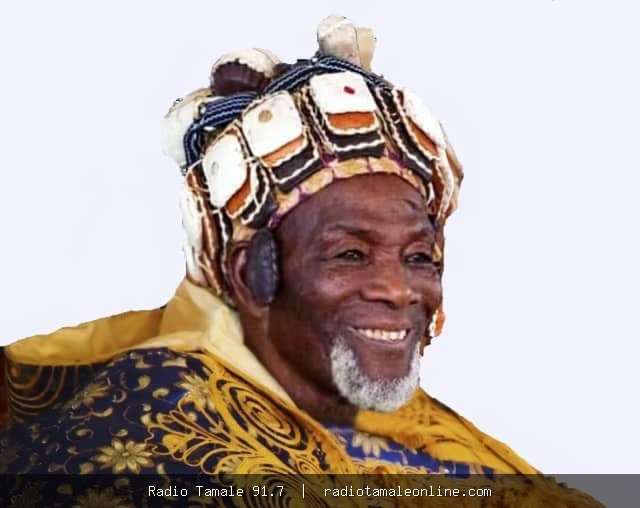
HRM Yaa Naa Mahama Abukari II; Nayei !!!. May you rest in peace.
Source : Dr. H. S Daannaa (Chieftaincy Researcher, Legal Anthropologist and Former Minister responsible for Chieftaincy and Traditional Affairs).









0 Comments