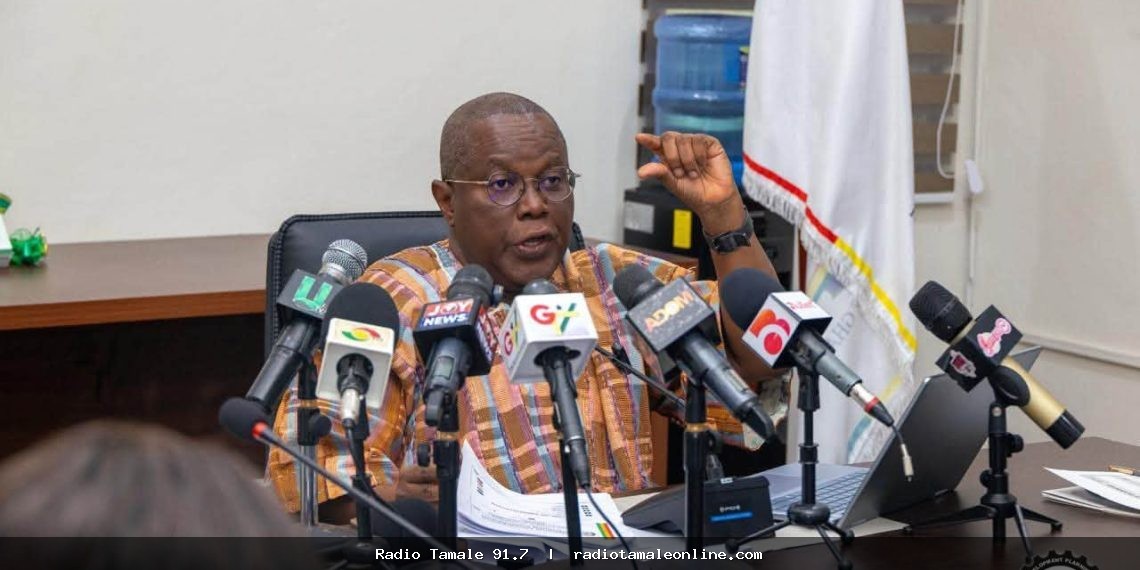
The National Development Planning Commission (NDPC) has stated that Ghana recorded improvements in key macroeconomic indicators in 2025, but cautioned that persistent youth unemployment, weak public service delivery and implementation challenges continue to undermine the country’s development efforts.Ghana tourism promotion
The findings are contained in the 2025 National Annual Progress Report (APR), launched by the Commission on Thursday, July 16, as the final assessment of the Agenda for Jobs II: Creating Prosperity and Equal Opportunity for All (2022–2025) policy framework.
Speaking at the launch, the Chairman of the Commission, Dr. Nii Moi Thompson, said the report presents an objective assessment of Ghana’s development performance over the past year and serves as an important accountability tool for promoting transparency and evidence-based policymaking.
He noted that while the report records encouraging macroeconomic improvements, it also highlights critical areas requiring urgent policy attention.
According to the report, Ghana experienced stronger economic growth in 2025, alongside declining inflation, improved fiscal performance and a reduction in the public debt-to-GDP ratio.
However, the Commission said these gains were accompanied by persistent development challenges, including high youth unemployment, poor maternal health outcomes, weak implementation capacity and deficiencies in public service delivery.
Dr. Thompson said the Annual Progress Report is one of the Commission’s principal accountability instruments, prepared in fulfilment of its constitutional mandate to monitor, evaluate and report on the implementation of national development policies, programmes and projects.
“The report provides a balanced assessment of Ghana’s development performance. While it records improvements in key macroeconomic indicators, including stronger economic growth, declining inflation, improved fiscal performance and a reduction in the public debt-to-GDP ratio, it also identifies persistent challenges such as youth unemployment, maternal health outcomes, implementation capacity and public service delivery,” he said.
The Director-General of the NDPC, Dr. Audrey Smock Amoah, said the media engagement was organised to ensure journalists and other stakeholders had a clear understanding of the report before its public release to support accurate, balanced and evidence-based reporting.
She explained that the report was compiled through nationwide monitoring and evaluation exercises coordinated by the Commission using Annual Progress Reports submitted by Ministries, Departments and Agencies (MDAs), Regional Coordinating Councils (RCCs), Metropolitan, Municipal and District Assemblies (MMDAs), as well as official national data.
According to her, the findings underwent rigorous verification, validation, technical review and approval by the Commission before publication.
Presenting an overview of the report, the Commission’s Chief Analyst, Mr. Isaac Eweh, said the assessment evaluates implementation of the national medium-term development policy framework across all levels of government.
He explained that beyond measuring progress, the report identifies implementation gaps, emerging challenges and priority areas requiring policy attention.
Mr. Eweh said the findings are intended to inform government decision-making, strengthen accountability and guide future national development planning while providing policymakers, development partners, civil society organisations, the private sector and citizens with credible evidence on Ghana’s development performance in 2025.





0 Comments