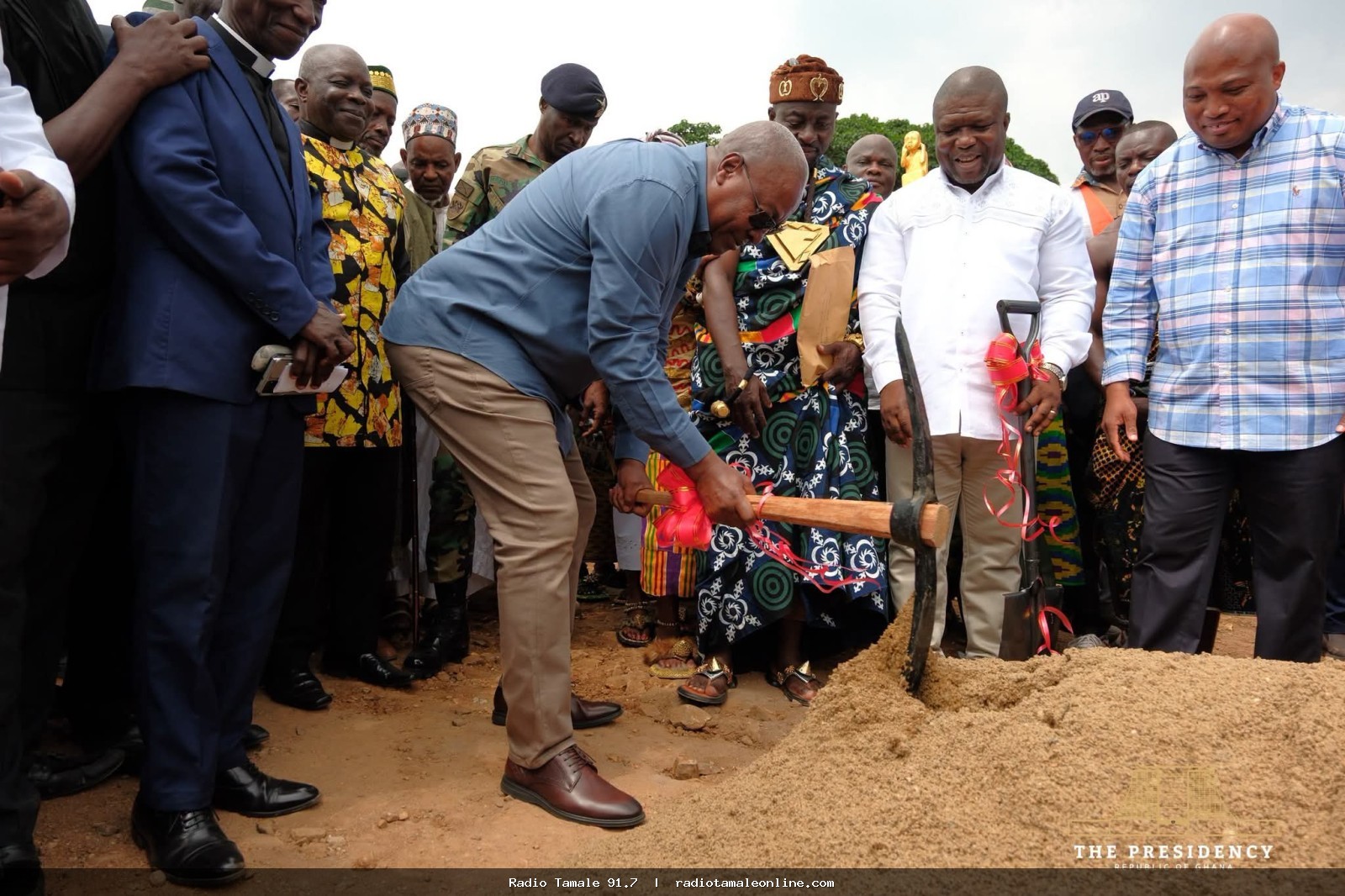
President John Dramani Mahama has announced the selection of a strategic investor to revive the defunct Volta Star Textiles Limited (formerly Juapong Textiles) and restarted work on a stalled multipurpose laboratory at the University of Health and Allied Sciences (UHAS) in Sokode, moves he says form part of a wider push to revitalise the Volta Region’s economy.
The President made the announcements at a sod‑cutting ceremony in Juapong for a new 24‑hour market, a flagship project intended to stimulate local commerce in North Tongu. Juapong grew historically around the textile mill, which supported a vibrant local economy for decades before it closed. Successive governments tried and failed to restore the plant.
“We are committed to bringing this vital institution back to life to serve as an anchor for local economic growth,” Mr Mahama told chiefs and residents at the ceremony, adding that the factory’s revival aims to create direct jobs for youth and generate a value chain of secondary businesses.
A transaction adviser previously vetted potential partners, and the President said a strategic investor has now been selected. The partner is expected to visit the factory imminently to assess conditions and finalise plans to retool and refurbish machinery. To ensure steady raw‑material supply when production resumes, cotton will initially be sourced from neighbouring Benin, Mr Mahama said.
Volta Star Textiles produces grey baft a semi‑finished woven fabric used as input for finished textile goods and officials say its restart should also provide a reliable market for local and regional cotton farmers, boosting the agricultural sector.
University laboratory revival
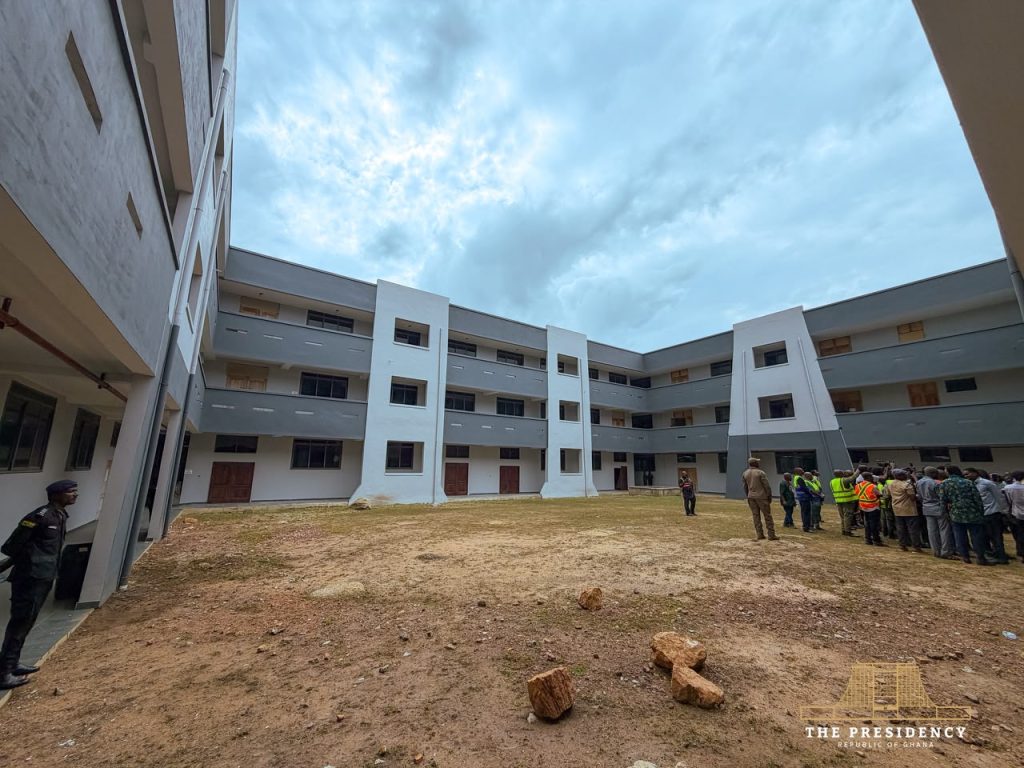
Separately, Mr Mahama announced that work has resumed on a 5,300‑square‑metre Laboratory Complex at UHAS’s Sokode campus, a project he described as central to his “Reset Agenda” to decentralise development and equip youth with practical, world‑class skills.
The five‑block facility which began in 2014 but stalled for years — will accommodate more than 1,200 students and staff and include specialised research, anatomy and radiology simulation labs. Officials say it will be the largest facility of its kind in Ghana and the sub‑region when completed.
The laboratory complex is designed to shift medical training from theory to hands‑on practice. With advanced simulation equipment, graduates should be better prepared for the global medical workforce. The facility will also provide diagnostic, toxicology and research services to hospitals and private firms, generating Internally Generated Funds (IGF) intended to support long‑term maintenance of the high‑tech equipment.
Economic ripple effects
Government planners expect the combined impact of the textile revival, the new market and the UHAS laboratory to produce a significant economic multiplier for the Volta Region. With improved roads linking Ho and surrounding towns, the region is becoming more accessible a factor that officials say could attract international students from neighbouring West African countries and boost demand for housing, transport, retail and agricultural produce.
Mr Mahama framed the projects as interconnected components of a broader development strategy aimed at creating self‑sustaining institutions, local jobs and cross‑border economic activity.
“These investments are not standalone; they form part of a holistic plan to drive sustainable growth across the Volta Region and beyond,” he said.
Local reactions and next steps
Community leaders at Juapong welcomed the announcements, calling the twin interventions a potential turning point for a town long shaped by the rise and fall of its textile industry. University and regional officials said they would fast‑track procurement and construction processes to ensure the UHAS complex is completed and commissioned as planned.
The investor’s inspection of the Volta Star site and the continuation of laboratory construction at UHAS are expected to take place over the coming months. Authorities say both projects will be closely monitored to ensure they contribute to job creation, skills development and regional economic revival.
By Blessed EDUAMOAH DADZIE









0 Comments