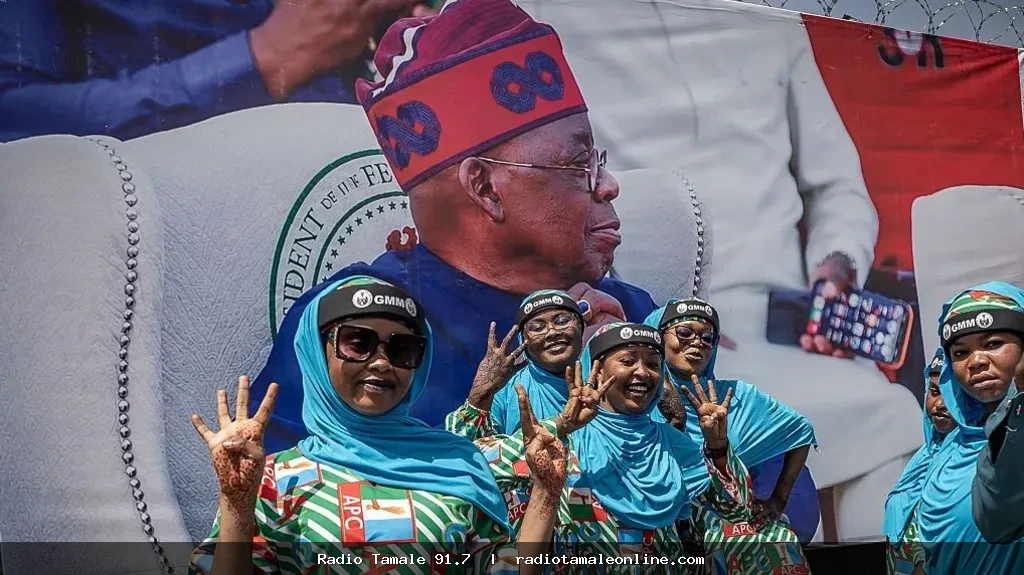
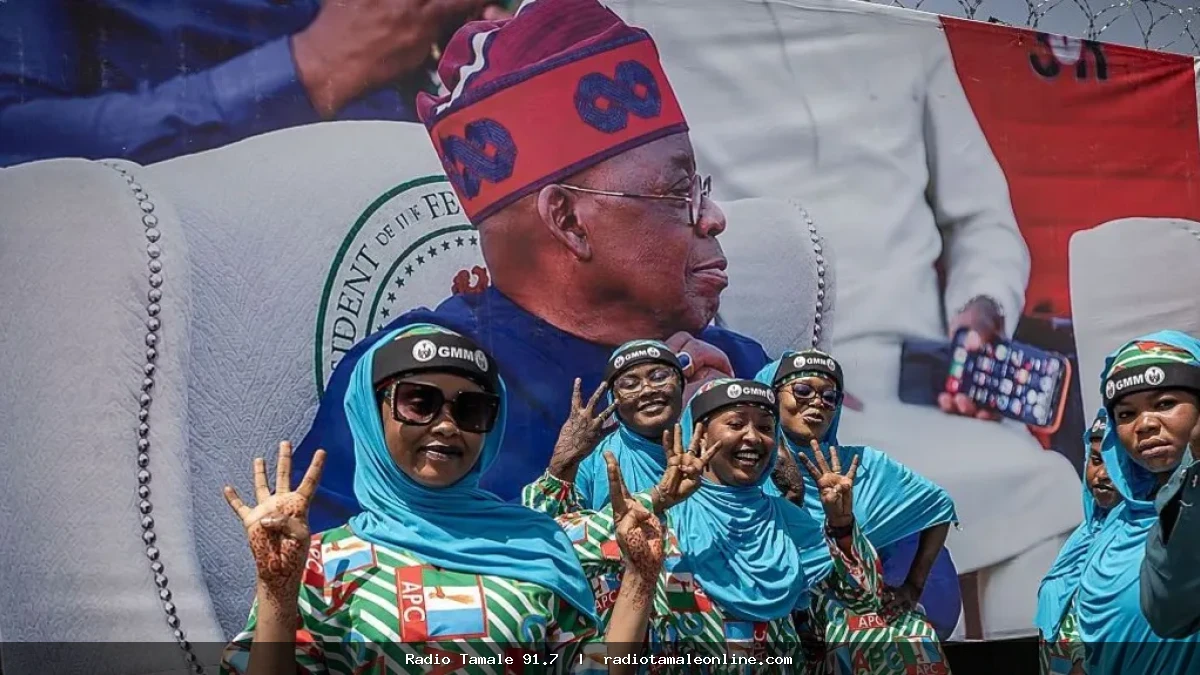
Nigeria's President Bola Ahmed Tinubu has launched his re-election manifesto, promising to grow the economy, tackle insecurity and address housing shortages.
The plan targets 6% annual economic growth by 2031, 78,000 additional security personnel and 200,000 affordable homes.
Titled From Reform to Prosperity, the manifesto builds on Tinubu's first-term economic reforms, including the removal of the fuel subsidy, which has pushed up living costs.
Nigeria is due to hold a general election in January 2027, with Peter Obi and former Vice-President Atiku Abubakar among Tinubu's main challengers.
The manifesto, launched on 10 November by his party, the All Progressives Congress (APC), reflects the government's bid to win back the trust of Nigerians.
Elected in 2023, Tinubu undertook a series of economic reforms, including the removal of fuel subsidies, the harmonisation of official and parallel foreign exchange rates, and tax reforms in Africa's largest oil producer.
"That manifesto was trying to get Nigeria back on its feet, given the condition of the country at that time, slipping into austerity," Joshua Osiyemi, who heads Tracka, a platform launched by the BudgIT Foundation, which is a non-profit organisation that aims to make government financial data easier to understand.
The reforms, although considered necessary by some economists, have been painful for many Nigerians.
"Fuel prices went up, and everything that Nigerians consume skyrocketed," Osiyemi told the BBC.
"Most Nigerian families are saying they cannot survive on 10,000 naira [$7.40; £5.50] a day," he said, referring to a survey conducted by his organisation.
Analysis by Nigeria's International Centre for Investigative Reporting (ICIR) found that the price of imported rice rose by 184% between May 2023, when Tinubu took office, and October 2025. Other staples, including beans, garri (cassava flour) and bread, also recorded substantial increases.
In a sign that the reforms might be starting to pay off, SBM Intelligence, a security risk consulting firm, found that the cost of preparing a pot of jollof rice fell by 11.5% between June and September 2026, the sharpest decline it had recorded in the 10 years it has been running its Jollof Index.
However, this has not translated into significant relief for most households.
"Nigerians spend more and more of their income on basics," said Ikenna Okonkwo, head of research at SBM Intelligence.
The reforms were praised by the World Bank and the International Monetary Fund (IMF) for their effectiveness.
Nigeria's headline inflation stood at 14% in September 2026, according to the National Bureau of Statistics, down from a high of 34% in 2024. The gap between the official and parallel exchange rates has also narrowed.
Tinubu has said the removal of fuel subsidies freed up more than one trillion ($740m; £550m) naira in government resources in just the first two months.
Nigeria is due to hold elections in January, with Peter Obi and former Vice-President Atiku Abubakar (pictured above) among Tinubu's main opposition challengers
However, he has recently said he will work to reduce fuel cost.
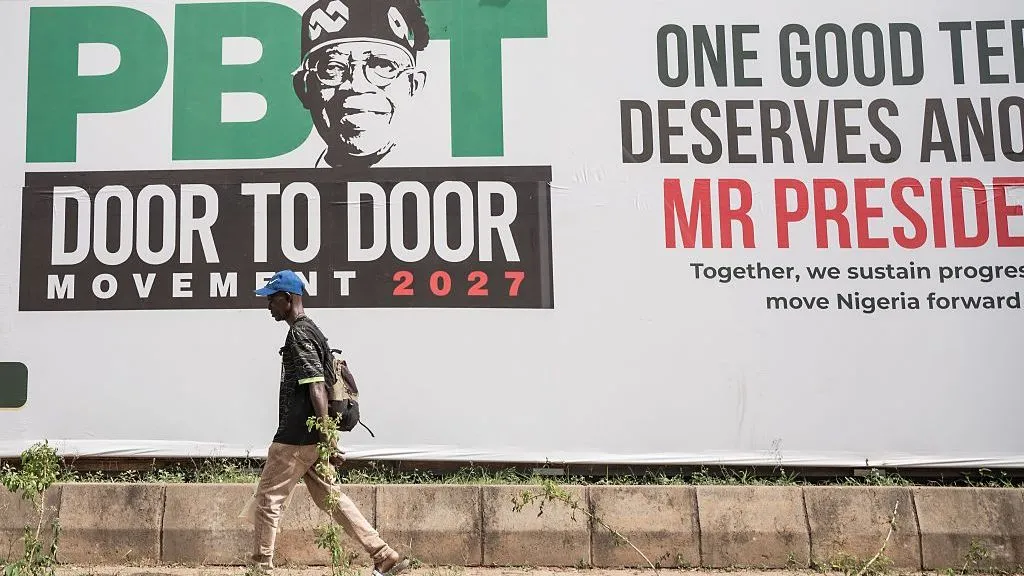
His administration subsequently announced a 125bn naira intervention package for small businesses, including grants for smaller enterprises and loans for manufacturers.
Atiku has criticised Tinubu's decision to remove the fuel subsidy.
"My position stands! I will restore subsidy to make life easier and affordable for Nigerians," Atiku wrote on X.
However, restoring the fuel subsidy could prove challenging given Nigeria's economic realities.
"The current budget for Nigeria in 2026 is about 68.32tn naira, with 15.8tn going towards debt servicing. So, we are not fiscally strong enough to say that we want to return to the subsidy," Osiyemi said.
While Tinubu's reforms are lauded for restoring some stability at the macroeconomic level, they have also created instability in households.
Two months away from elections, the cost of living and economic hardship are the major issues for many voters.
"These kinds of things can get punished in polls," said Okonkwo of SBM Intelligence.
To address this, Tinubu promised to lower the cost of living, grow the economy by 6% and halve youth unemployment if he wins re-election. Achieving these targets will require increased oil and agricultural production.
But much of Nigeria's agricultural production is concentrated in the north, where insecurity has made farming increasingly difficult.
Osiyemi says many farmers are reluctant to return to their fields.
"They're not sure whether when they go to their farms, they have the chances of also coming back home, to meet with their family."
To address insecurity, Tinubu proposes recruiting an additional 28,000 military personnel and 50,000 police officers.
"The security situation, especially in the north, is more complex than a matter of just recruiting more soldiers," Okonkwo said.
The threats include jihadists, kidnap gangs and conflict between herders and farmers in central Nigeria.
Insecurity is also a major priority for Obi, the Nigeria Democratic Congress (NDC) presidential candidate, who came third in the 2023 presidential election and attracted significant support from young Nigerians.
He unveiled his 2027 Governance Agenda on 10 November, under the campaign slogan "A New Nigeria is Possible", placing national unity at the top of his priorities, followed by security.
"Nobody will kidnap school children and disappear into the bush. If you kidnap children and go into the bush, you will not be alone there. We will come after you," he said.
Further, delivering on those ambitions will also depend on improving electricity supply, particularly for businesses and industries. Tinubu promises to increase available electricity generation towards 10,000MW.
"There is nothing in the manifesto about where that investment is going to come from because it will cost a lot of money," said Okonkwo.
Source: BBC
0 Comments