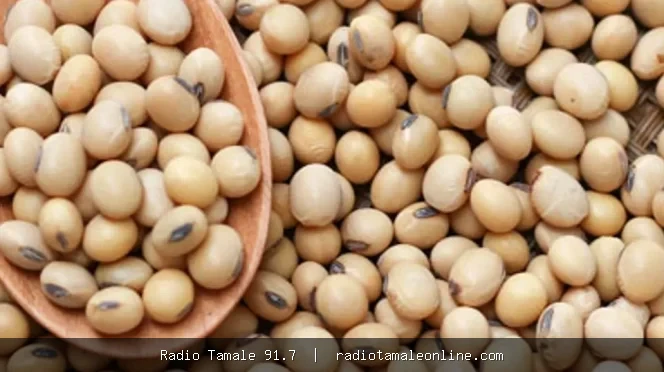
The price of a bag of soya beans has fallen from GH¢800 in 2024 to GH¢350 following the government’s decision to restrict exports of the commodity, Director of Presidential Initiatives in Agriculture and Agribusiness, Dr Peter Boamah Otokunor has said.
He said the restriction had helped stabilise prices and improve access to soya beans for Ghana’s livestock industry, which had faced challenges from the export of raw produce instead of processing it locally.
Speaking in an interview on Channel One TV, Dr Otokunor said the government introduced the measure to retain more of the commodity in the country and support local value addition.
“The biggest challenge of the livestock industry had been soya bean. And we were just exporting the grain. So the government had to take a bold decision that, look, we are going to cease the exportation of soya bean,” he said.
He said the policy had contributed to a significant reduction in the cost of the commodity.
“When we took the decision to ban, it has stabilised the price of soya bean. Like in 2024, I was buying a bag of soya bean for 800 Ghana cedis. Now I’m buying a bag of soya bean for 350 Ghana cedis,” he added.
Dr Otokunor said soya beans could be processed into products such as oil and soya meal, which are important to the domestic economy.
“When we export the raw soya bean, you have exported all this value. The oil comes back to you very expensive. Then the milk comes back to you very expensive,” he stated.
He argued that retaining more of the crop locally would encourage investment in processing and enable Ghana to capture more value from its agricultural produce.
On rice production, Dr Otokunor urged farmers not to be discouraged by short-term market challenges, saying the government’s sustainable food service measures were expected to provide ready markets for their produce and support the expansion of farms.
He noted that about 95 per cent of farmers in Ghana were smallholders and said efforts were needed to build their capacity and equip them to move into commercial production.
He also identified investment in post-harvest infrastructure as necessary to manage supply, reduce losses and improve farmers’ access to markets.
“If you have systems to handle the post-harvest, it means that you’ll be able to smooth your supply. And you wouldn’t have some of these challenges,” he said.
According to him, countries that supply Ghana with agricultural imports have established post-harvest systems that enable them to meet domestic demand and export surplus produce.
Dr Otokunor said Ghana had the potential to produce enough food for local consumption and supply neighbouring markets, which he said were seeking commodities including soya beans, rice and maize.






0 Comments